
Post Polio Syndrome Treatment

The Center for Physical Medicine & Rehabilitation Center in Michigan.
“Many people who survived polio spent years building active, independent lives. They went to work, raised families, stayed involved in their communities, and often believed the effects of polio were behind them.
Then something changes. Walking becomes more tiring than it used to be. Muscles that felt strong for decades begin to weaken. Everyday tasks require more effort. Some people notice new pain in their joints, while others struggle with fatigue that does not improve with rest.
These symptoms are often caused by Post-polio syndrome (PPS), a condition that can develop many years after the original polio infection. Although there is no cure for post-polio syndrome, treatment can make a meaningful difference. With the right rehabilitation plan, many people can reduce fatigue, improve mobility, manage pain, and maintain their independence for years to come.”
“Our goal is simple. We help people stay active, safe, and as independent as possible.”
What Is Post-Polio Syndrome (PPS)?
“Post-polio syndrome (PPS) is a neurological condition that affects some people who previously had polio. During the original infection, polio damaged nerve cells that control muscle movement. Over time, the body adapted. Healthy nerve cells took on extra work to help muscles function, allowing many survivors to regain strength and return to normal activities.
Years later, those same nerve cells can begin to wear out from decades of increased demand. As they lose function, new symptoms may appear. For many patients, this comes as a surprise. Symptoms often develop 30 to 40 years after the initial illness, making it difficult to connect current problems with a disease they experienced decades ago.
Common Symptoms of Post Polio Syndrome
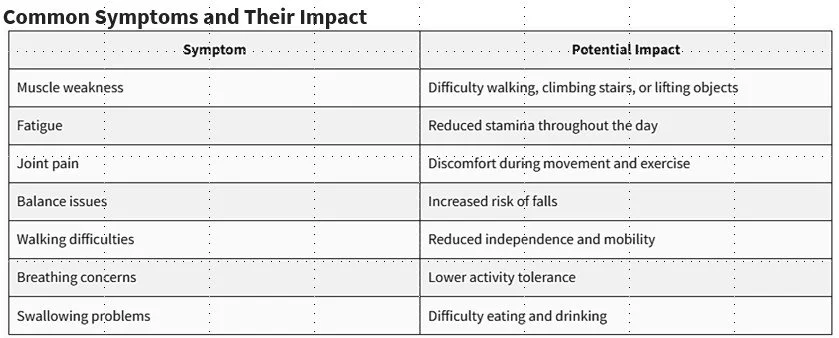
Post-polio syndrome does not affect everyone in the same way. Some people notice mild changes, while others experience symptoms that interfere with daily activities. Common symptoms include:
Progressive Muscle Weakness: Muscles that were previously affected by polio may gradually lose strength. Climbing stairs, standing from a chair, carrying groceries, or walking longer distances can become more difficult.
Ongoing Fatigue: Fatigue is one of the most common complaints among people with Post-polio syndrome. Many patients describe feeling exhausted after activities that once felt routine.
Joint and Muscle Pain: When muscles become weaker, other parts of the body often compensate. This can place additional stress on joints, tendons, and surrounding muscles, leading to chronic pain.
Difficulty Walking: Changes in strength, balance, and endurance can affect walking ability. Some patients notice a slower gait, while others begin experiencing instability or falls.
Balance Problems: Weakness in the legs and core muscles can make it harder to maintain balance, especially on uneven surfaces.
Breathing or Swallowing Difficulties: In some cases, muscles involved in breathing or swallowing may be affected, creating additional health concerns that require medical attention.
How Is Post Polio Syndrome Diagnosed?
There is no single test for Post-polio syndrome. Diagnosis typically involves a comprehensive evaluation. During your assessment, we may review:
Medical history: Understanding previous polio infection and symptom progression helps establish an accurate diagnosis.
Physical examination: We assess muscle strength, flexibility, mobility, and functional limitations.
Neurological evaluation: This helps identify patterns consistent with Post-polio syndrome.
Additional testing when necessary: Diagnostic studies may be used to rule out other conditions that can mimic similar symptoms.
Why Treatment Matters
Many people assume that these symptoms are simply part of getting older when it could be due to post-polio syndrome, which requires a different approach. Without proper treatment, patients often push themselves harder in an attempt to overcome weakness and fatigue.
Unfortunately, overworking already stressed muscles can make symptoms worse. A well-designed rehabilitation plan helps patients conserve energy, protect weakened muscles, improve movement patterns, and maintain function for the long term.
How Post-Polio Syndrome Treatment Helps
Successful Post-polio syndrome treatment focuses on preserving function rather than forcing weakened muscles to do more than they can safely handle. At CPMR, treatment plans are customized around each patient’s symptoms, goals, and activity level. Treatment may include:
Physical Medicine and Rehabilitation
Physical Medicine and Rehabilitation focuses on improving function, mobility, comfort, and quality of life. We evaluate how symptoms affect daily activities and create a plan that addresses each patient’s specific challenges.
Therapeutic Exercise
Exercise can be beneficial for people with Post-polio syndrome, but the wrong exercise program can lead to increased fatigue and muscle strain. Carefully prescribed exercise helps maintain strength, flexibility, and endurance while minimizing the risk of overuse.
Energy Conservation Strategies
Learning how to manage energy throughout the day is often one of the most effective treatments available. Small adjustments in daily routines can reduce fatigue and make activities more manageable.
Pain Management
Pain can develop when weakened muscles place extra stress on joints and surrounding tissues. Treatment may include targeted rehabilitation strategies, activity modifications, and other non surgical approaches designed to improve comfort and mobility.
Mobility Support
Braces, orthotics, canes, walkers, and other assistive devices may help reduce stress on weakened muscles while improving safety and confidence during movement.
What Makes Rehabilitation Different for Post Polio Syndrome?
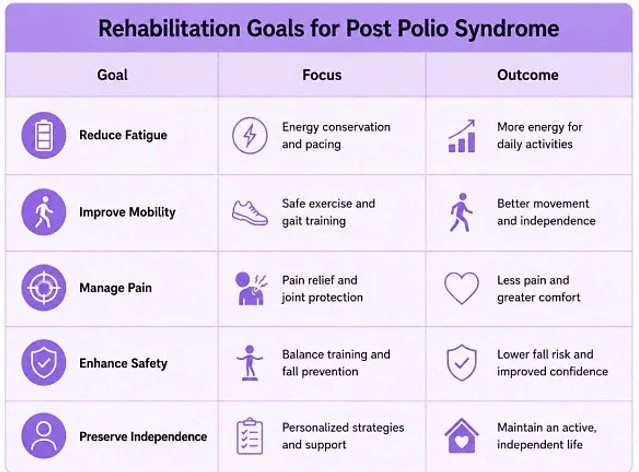
One of the biggest misconceptions about post-polio syndrome is that patients simply need to exercise more. In reality, rehabilitation for Post-polio syndrome is very different from traditional strengthening programs. The goal is not to push through weakness. The goal is to preserve function, avoid overuse, and improve efficiency of movement.
Rehabilitation Goals for Post Polio Syndrome
When treatment is tailored correctly, patients often find they can accomplish more while using less energy.
Frequently Asked Questions About Post Polio Syndrome Treatment
Can Post Polio Syndrome Be Cured?
There is currently no cure for Post Polio Syndrome. However, specialized rehabilitation and symptom management strategies can help reduce discomfort, improve function, and maintain independence.
What Is the Best Treatment for Post Polio Syndrome?
There is no single treatment that works for everyone. Most patients benefit from a combination of rehabilitation, carefully guided exercise, energy conservation techniques, pain management, and mobility support.
Does Physical Therapy Help Post Polio Syndrome?
Yes. Physical therapy can help improve mobility, flexibility, balance, and overall function. The key is following a program specifically designed for Post Polio Syndrome to avoid overworking weakened muscles.
Why Do Post Polio Syndrome Symptoms Appear Years Later?
Researchers believe that nerve cells damaged during the original polio infection spend decades working harder to support muscle function. Over time, those nerve cells may lose their ability to keep up with demand, leading to new symptoms.
When Should I Seek Treatment for Post Polio Syndrome?
If you have a history of polio and notice new weakness, fatigue, pain, balance problems, or difficulty walking, it is a good idea to schedule an evaluation. Early treatment can help prevent unnecessary loss of function and improve quality of life.
Take the First Step Toward Better Function and Mobility
If you are experiencing new symptoms years after recovering from polio, you do not have to face those challenges alone. Learn how personalized rehabilitation can help you stay active and independent.”
Source: Center for Physical Medicine Rehabilitation Center in Eastern Michigan . Published with permission 2026.
Clinic Contact: 586-778-4505 Information for SE Michigan survivors: michpoliogroup@gmail.com