Rehabilitative Medicine. What is it?
Whether in the US or abroad, these concerns are the same for Polio survivors. The positive impact of polio survivors seeing a Rehabilitative Physician (physiatrist) for care. What is a Rehabilitative Physician (physiatrist) ? Is that the same as a neurologist? Some are DO’s and some are MD’s. Are they the same?
What is the difference between an MD and a DO ?
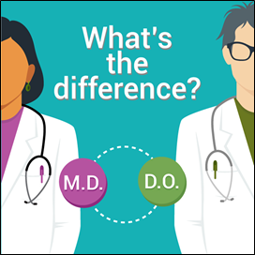
A doctor of osteopathic medicine (DO) is a fully trained and licensed doctor who has attended and graduated from a U.S. osteopathic medical school. A doctor of Medicine (MD) has attended and graduated from a conventional medical school.
The major difference between osteopathic and allopathic doctors is that some osteopathic doctors provide manual medicine therapies, such as spinal manipulation or massage therapy, as part of their treatment.
After medical school, both MD’s and DO’s must complete residency training in their chosen specialties. They must also pass the same licensing examination before they can treat people and prescribe medications.
(Source: the Mayo Clinic)
What is a Rehabilitative Physician?
“A rehabilitation doc (a phys-EYE-a-trist) does a medical residency learning to help people thrive with their disabilities: Physiatrists, or rehabilitation physicians, are nerve, muscle, and bone experts who treat injuries or illnesses that affect how you move. Rehabilitation physicians are medical doctors who have completed training in the medical specialty of physical medicine and rehabilitation.”
“Physical Medicine and Rehabilitation (PM&R), also known as physiatry, is a medical specialty that involves restoring function for a person who has been disabled as a result of a disease, disorder, or injury.
Physiatry provides integrated, multidisciplinary care aimed at recovery of the whole person by addressing the individual's physical, emotional, medical, vocational, and social needs. A doctor who specializes in physical medicine and rehabilitation is called a physiatrist.”
Source: (PM&R).
What is a Neurologist?
“A neurologist is a medical doctor with specialized training in diagnosing, treating, and managing disorders of the brain and nervous system including, but not limited to, Alzheimer’s disease, amyotrophic lateral sclerosis (ALS), concussion, epilepsy, migraine, multiple sclerosis, Parkinson’s disease, and stroke.”
Source: American Academy of Neurology
About Physical Medicine & Rehabilitation from
What is Physiatry?
“Physiatry provides integrated, multidisciplinary care aimed at recovery of the whole person by addressing the individual's physical, emotional, medical, vocational, and social needs. A doctor who specializes in physical medicine and rehabilitation is called a physiatrist.”
What is Rehabilitation?
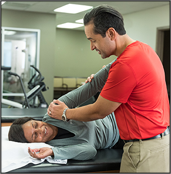
“Rehabilitation is the process of helping a person achieve the highest level of function, independence, and quality of life possible. Rehab does not reverse or undo the damage caused by disease or injury, but rather helps restore the person to optimal health, functioning, and well-being. Rehabilitate means to make able.”
The Rehabilitation Program
“Rehabilitation medicine is designed to meet each person's specific needs; therefore, each program is different. Some general treatment components for rehab programs include:
Treating the basic disease and preventing complications
Treating the disability and improving function
Providing adaptive tools and altering the environment
Teaching the patient and family and helping them adapt to lifestyle changes
The success of rehab depends on many variables, including:
The nature and severity of the disease, disorder, or injury
The type and degree of any resulting impairments and disabilities
The overall health of the patient
Family support”
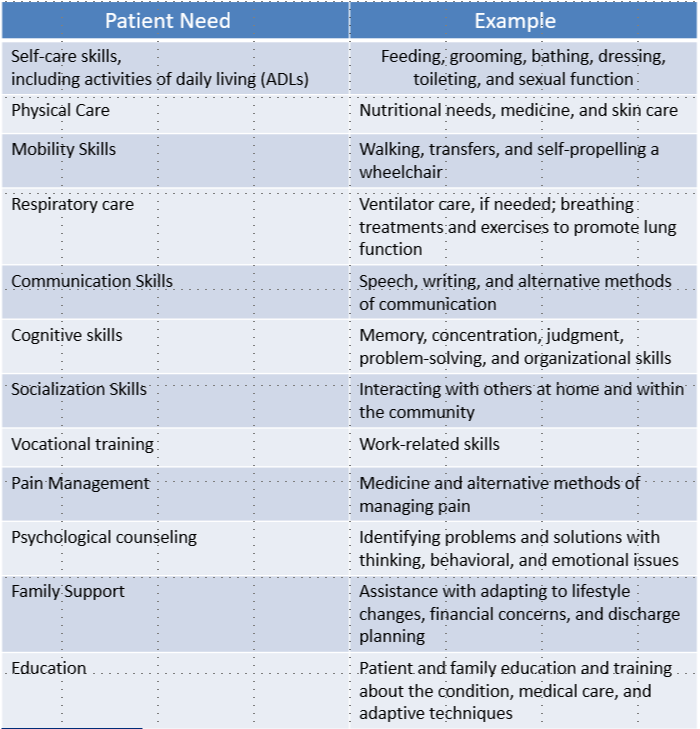
Areas Covered In Rehabilitation Programs May Include The Following:
Understanding Rehabilitation Terminology:
“Rehabilitation is needed when a disease and injury causes an impairment.
Consider the following:
An impairment is a loss of normal function of part of the body, such as paralysis of a leg.
Disability occurs when a person is not able to perform an activity in a normal way as a result of an impairment, such as not being able to walk.
A handicap occurs when there are limits that prevent a person with a disability from performing a role that is normal for that person, such as not being able to work.
A handicap refers to a barrier that may be imposed by society, the environment, or by one's own attitude.
Most people with disabilities are not considered handicapped. They go to school, work, perform family duties, and interact with society fully and capably.”
Specialized Areas of Rehabilitation
“There are many different specialized areas of rehabilitation - each with individual goals and approaches to care.” Listed below are three discussed in the article that polio survivors may find helpful to talk to their doctors about:
Musculoskeletal Rehabilitation. What is musculoskeletal rehabilitation?
“A musculoskeletal rehabilitation (rehab) program is supervised by a team of medical professionals. It is designed for people with impairments or disabilities due to disease, disorders, or injury to the muscles, tendons, ligaments, or bones. These programs can often improve a person's ability to function and reduce their symptoms. They can also improve their well-being.”
Neurological Rehabilitation. What is neurological rehabilitation?
“Neurological rehabilitation (rehab) helps people with diseases, injury, or disorders of the nervous system. It can often increase function, ease symptoms, and improve a person's well-being.
Many health problems can impair the nervous system. Some of the conditions that neurological rehab may help with include: Infections, such as meningitis, encephalitis, polio, and brain abscesses.”
Pulmonary Rehabilitation. What is pulmonary rehabilitation?
“Pulmonary rehabilitation is a medically supervised program for people with long-term (chronic) lung diseases. It may also be used before or after lung surgery. It may also help improve lung function in people with scoliosis.”
Note: Poliomyelitis/Post-Polio Syndrome is listed under the topic: Pain-Neuromuscular Medicine Rehabilitation
Article Sources:
American Academy of Neurology, American Academy of Physical Medicine and Rehabilitation, Johns Hopkins School of Medicine and Johns Hopkins Health – Treatments, Tests and Therapies
For More Information about Health Care Providers - Go to: PPS Healthcare Providers - A Guide.