
Polio in Ancient Egypt
By Pamela Sergey

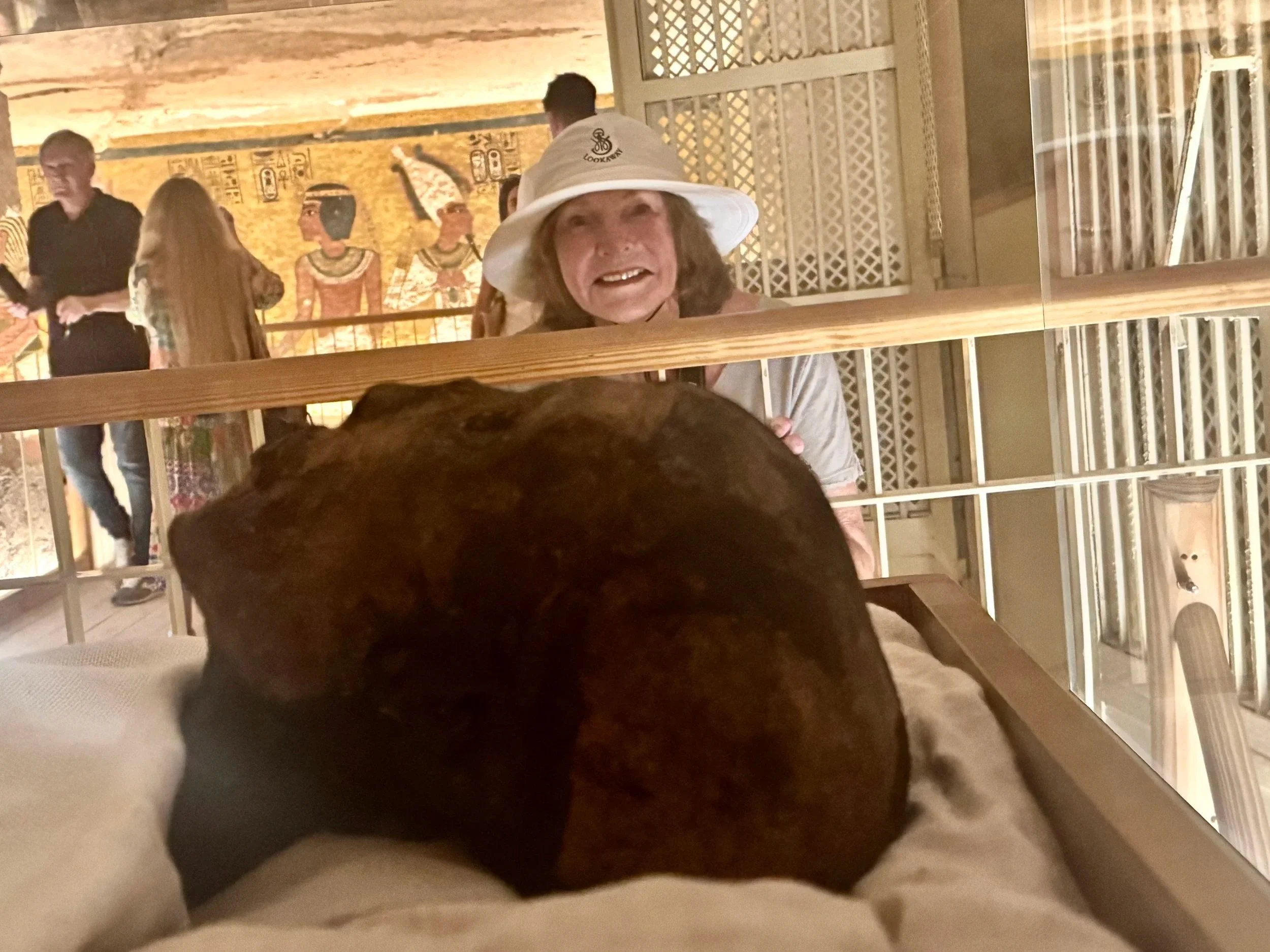
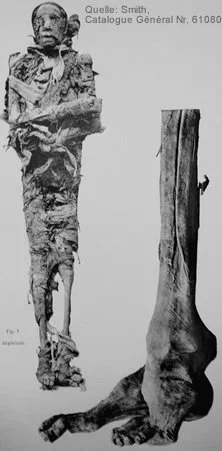
Siptah Mummy Photo Source: Pamela Sergey
During a recent trip to Egypt, I was surprised to find that disabilities and prostheses were evident in several of the mummies on view, suggesting that polio was present in Ancient Egypt. While unwavering confirmation is yet to be found, and the debate among paleopathologists and archeologists continues, Ancient Egyptian mummies and stelae provide compelling clues to polio’s existence more than 3,000 years ago.
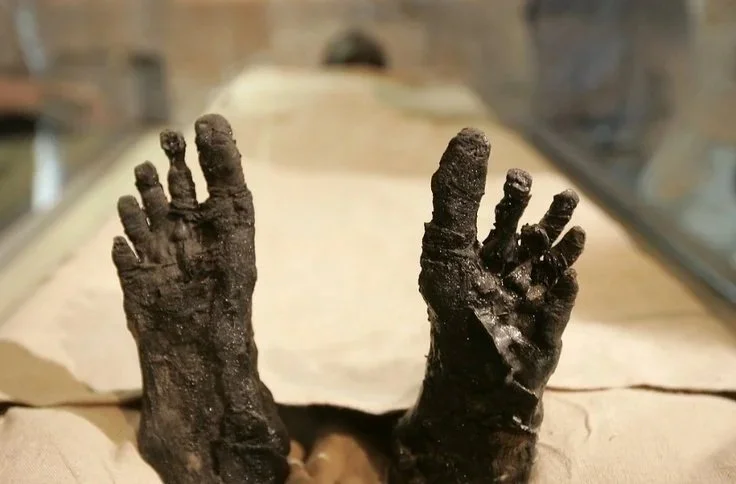
One such mummy, housed in the National Museum of Egyptian Civilization, (NMEC) Cairo, is that of Pharaoh Siptah, who reigned from 1197-1191 BC. In 1905, and again in 1980, researchers conducted X-rays and CT scans of Siptah’s mummy.
These revealed that the pharaoh died as a young man, possibly 20 years old, was 5’ 3” tall, and had a deformed shortened left leg and a curvature of the left foot. Paleopathologists have attributed this anomaly to polio. While Siptah was originally buried in the Valley of the Kings, tomb KV47, his mummy was discovered in 1898 along with 18 other royal mummies in tomb KV35. The mummies were probably placed there by succeeding Pharaohs to keep them safe from tomb robbers. They are all together now in the museum.

Prosthetic Toe from Mummy Photo Source: Pamela Sergey
Also in the NMEC is a prosthetic right big toe from a mummy belonging to the daughter of a high Ancient Egyptian priest. Based on artifacts found in the mummy’s burial chamber, the toe was artfully crafted around 1069 to 664 BC, out of leather and wood, and has three movable joints. The toe was refitted numerous times to precisely fit the owner’s foot, who died in her 50s, possibly due to complications from diabetes.
Infamously known as the “Cairo Toe”, it was unearthed in a burial chamber in the Sheikh Abd el-Qurna necropolis west of Luxor, Egypt, in 2000. Although other artificial body parts have been found on mummies, Egyptologists agree that the Cairo Toe is probably the oldest known functioning prosthesis discovered so far. Was the Cairo Toe used by its owner for aesthetics or functionality – symmetry or stability?
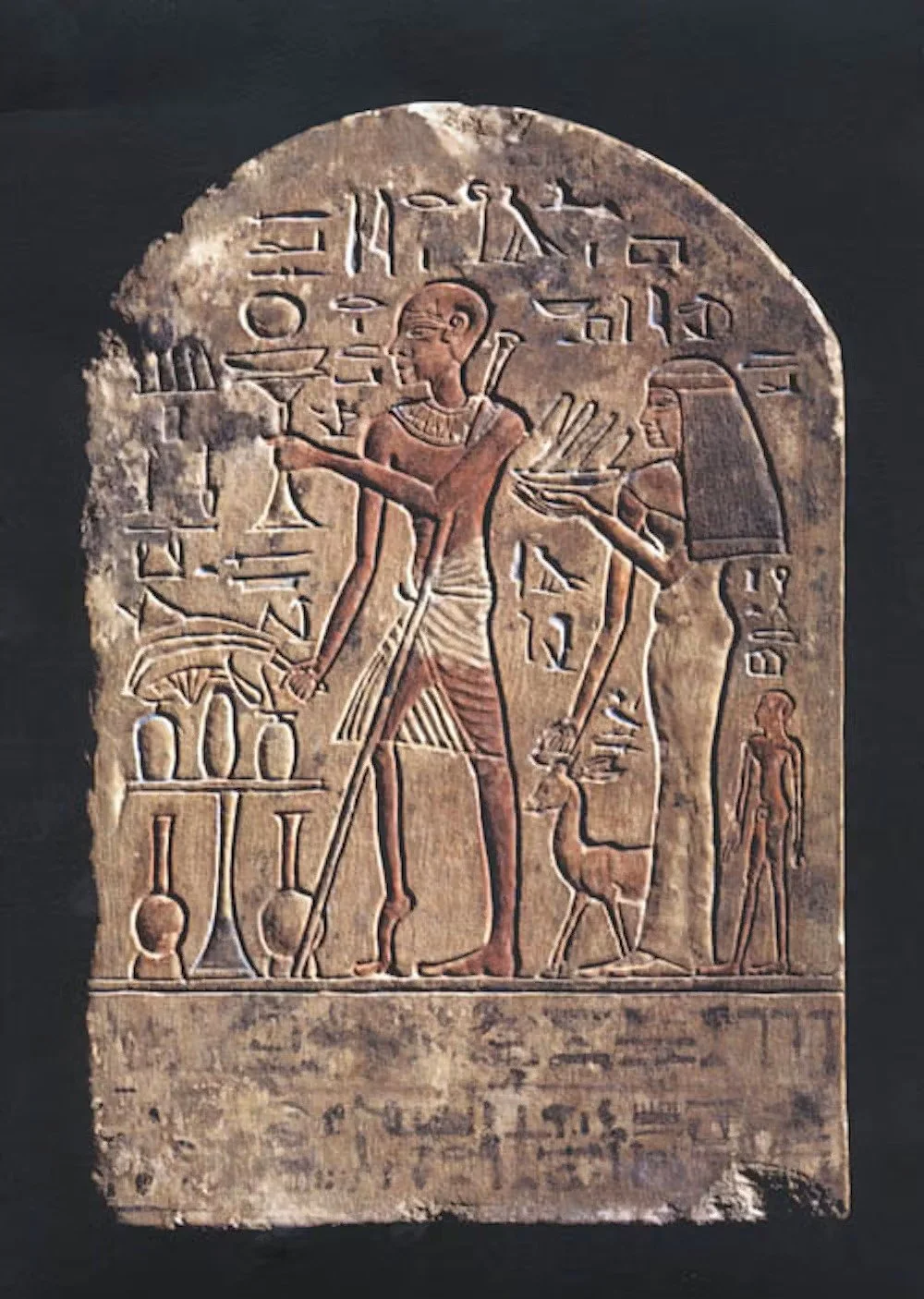
18th Dynasty Panel - Ruma Doorkeeper Photo Source: Wikpedia
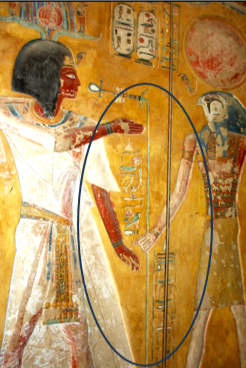
Even older than Siptah’s mummy, but depicting a similar disability, is a painted limestone memorial stone in the collection of the Ny Carlsberg Glyptoteket Museum, Copenhagen, Denmark. It is known as the “Stela of Ruma the Doorkeeper”, from Egypt’s New Kingdom 18th Dynasty, around 1401-1363 BC. A “doorkeeper” would have held a highly regarded position in Ancient Egyptian, be a high-ranking official, not a lower ranking guard, who controlled access to restricted areas such as palaces or temples. Ruma, sometimes described as a priest, is depicted making an offering to the Goddess Astarte, standing with a withered leg, one foot awkwardly supporting him only on his toes, with a walking stick leaning in the crook of his elbow. Although it has been tentatively proposed that Ruma may have suffered from polio as a young child, the evidence is unclear. Regardless of whether Ruma had polio or not, this Ancient Egyptian stela might be the first artistic portrayal of a person with a disability.
Even though Ancient Egyptian artwork and mummies suggest the presence of polio 3,000 years ago, definitive paleopathological evidence has yet to be found. Researchers seem to agree that polio in Ancient Egypt was asymptomatic in the majority of cases, leading to fewer artistic depictions of polio as a disability.
Before the development of modern sanitation, “enteric infections were so common that babies, exposed to human waste and poliovirus early in life, would have been protected by maternal antibodies [from breastfeeding] - in these instances, the invasion of poliovirus into the central nervous system and the resulting paralysis was avoided.(1) ”
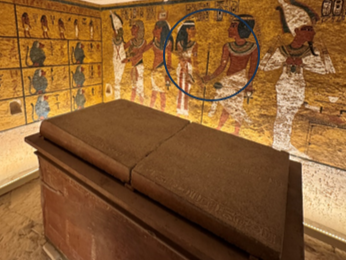
The “Boy King” holding a walking stick. Photo Source: Pamela Sergey in King Tut’s Tomb
Paleopathologists speculate that it wasn’t until the 19th and 20th centuries, with the advances in worldwide sanitation, that childhood polio immunity was reduced, leading to devastating paralytic polio outbreaks worldwide.
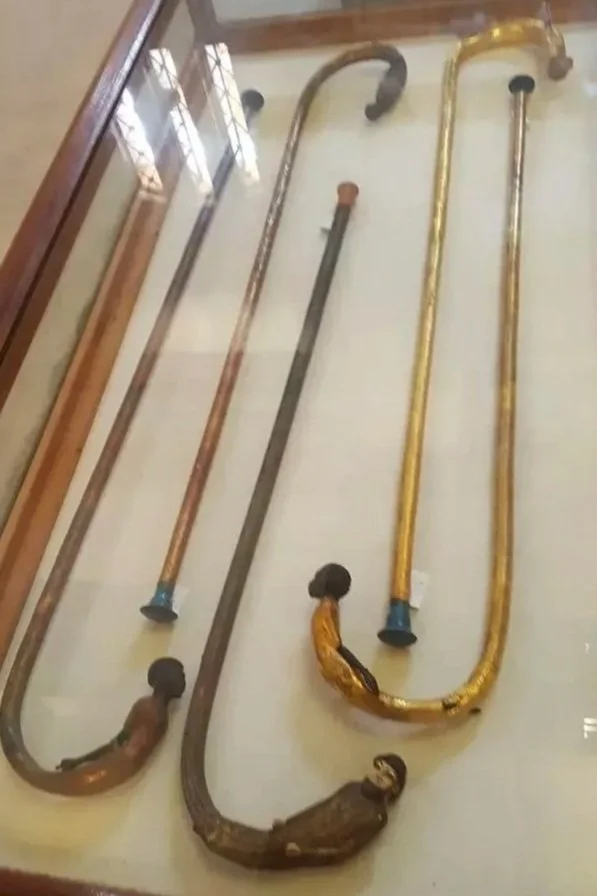
However, until conclusive evidence of polio in Ancient Egypt is found, it is fun to speculate. King Tutankhamun was “crowned” at the age of 9 or 10, and reigned Ancient Egypt c. 1332 to 1323 BC. He died at 18 or 19 under debated circumstances and was hastily buried in his famous tomb, albeit small for a Pharaoh, in the Valley of the Kings, KV62. An unusual number of walking sticks and canes were entombed with him, 130 according to the Museum of Egyptian Antiquities in Cairo. The majority were recently moved from the Museum of Egyptian Antiquities to the newly opened Grand Egyptian Museum in Giza.
Many of the canes were gilded and beautifully decorated, clearly for ceremonial usage, while others were timeworn and showed signs of use. Why so many walking sticks and canes?
A symbol of power and nobility, or ancient crutches used by such a young pharaoh? Was his left foot, X-rayed in 1968, deformed by polio or was it a birth defect?
Only time and next-generation technology may uncover more secrets of Ancient Egypt.
Let’s celebrate Egypt’s ongoing commitment to globally eradicate polio though vaccination. Supported by the Global Polio Eradication Initiative (GPEI) that included the World Health Organization (WHO) and UNICEF, Egypt launched an extensive polio eradication program in the early 1990s that included widespread vaccination campaigns for children under the age of 5, and enhanced surveillance for new cases. This concerted effort, led to a dramatic reduction in polio cases, culminating in Egypt being declared polio-free in 2006.
In late 2018, WHO confirmed Egypt was in the "final phase of eradicating" polio with the goal of preventing the polio virus from being reintroduced from neighboring and foreign countries.


Footnote: [1] Berner M, Pany-Kucera D, Doneus N, Sladek V, Gamble M (2021) Challenging definitions and diagnostic approaches forancient rare diseases: The case of poliomyelitis. International Journal of Paleopathology, Volume 33, Jume 2021, pp 113-127
Additional Sources:
Poliomyelitis in Ancient Egypt? Letter to the Editor published in Neurological Sciences, 9/24/2016, Vol 38 Poliomyelitis in Ancient Egypt? | Neurological Sciences
WHO/Eastern Mediterranean Region https://www.emro.who.int/polio-eradication/priority-countries/egypt.html
University of Basel, Department of Ancient Civilizations, Siptah KV 47: The Plant https://daw.philhist.unibas.ch/en/egyptology/research//siptah-kv-47/
Wikipedia Commons – Pharaoh Siptah images in public domain
Pamela’s many articles are located throughout our website.
“Click” on her name below or enter it into any “Search” bar.